A gully that fills with murky water after rain is more than an untidy corner of the garden. Left alone, it can overflow across paving, leave standing water by the property and allow unpleasant smells to build up. Knowing how to unblock outdoor gullies can solve a simple debris problem quickly, provided you work carefully and recognise when the blockage is further down the drain.
Outdoor gullies are the grated drainage points commonly found beside patios, driveways, paths and downpipes. Their job is to collect surface water and direct it into the underground drainage system. Because they sit at ground level, they also collect leaves, moss, soil, gravel and general garden debris. In London properties, autumn leaf fall, roof moss and washed-down silt are frequent causes of blockages.
Check What Is Blocking the Gully First
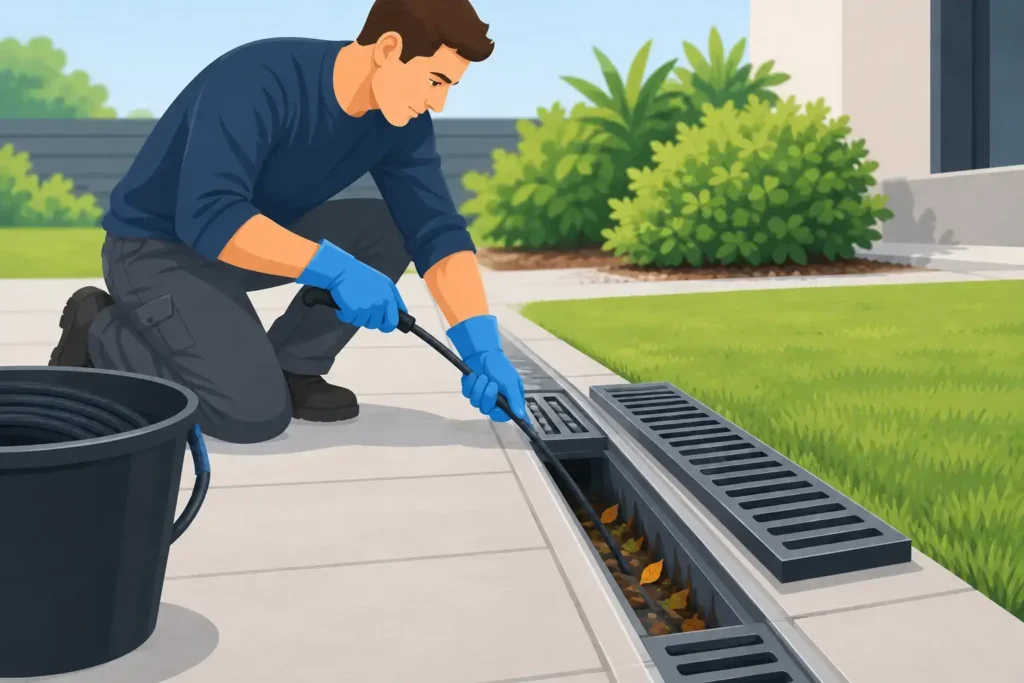
Before reaching for drain rods or chemicals, lift the grate and look inside. Put on waterproof gloves, sturdy footwear and old clothing. A small hand trowel, bucket, torch and stiff brush will deal with many routine blockages.
Most gullies have a trap or pot below the grate. This is designed to hold a small amount of water that prevents drain odours coming back up. It also catches heavier debris before it reaches the pipework. If the visible issue is a layer of leaves, mud or moss sitting in this pot, the job may be straightforward.
Scoop out loose debris slowly and place it in a bucket rather than pushing it deeper into the outlet. Remove stones, twigs and compacted organic matter by hand where possible. Avoid tipping this waste into another drain or flushing it down a toilet. Bag it with garden waste instead.
Once the gully pot is clear, shine a torch into the outlet pipe. If water begins draining away normally, the obstruction was local to the gully. If water remains high or drains only very slowly, there may be a blockage further along the run.
How to Unblock Outdoor Gullies With Water
After removing visible debris, rinse the gully with a bucket of clean water or a garden hose. Start gently. The aim is to check the flow, not force a large mass of silt into a narrow pipe.
If the water clears freely, brush the grate clean and refit it. Pour enough water back into the trap to leave a visible water seal at the bottom. This matters, particularly near doors, patios and bins, because an empty trap can allow drain smells to escape.
A hose can help shift light residue from the outlet, but do not put a high-pressure jet directly into an old or unknown drain line. High pressure is useful in the right hands, yet it can splash contaminated water, drive a blockage further down or expose weaknesses in damaged pipework. Older London properties may have ageing clay drains, altered runs or poorly accessible connections, so a measured approach is usually safer.
Use Drain Rods Only for a Deeper Blockage
If cleaning the pot has not restored flow, drain rods may help with a blockage a short distance beyond the gully. This is where DIY work needs more care. Rods can clear soft obstructions such as leaves and silt, but they can also compact material, become stuck or damage a pipe if used aggressively.
Use rods fitted with a suitable rubber plunger or screw attachment rather than an improvised metal tool. Feed them in gently, turning clockwise as you go. Continuing to turn clockwise is important when withdrawing the rods too, as anti-clockwise movement can unscrew a section inside the drain.
Work in short stages. Do not force the rods around a bend, and stop if you meet firm resistance or the water level starts rising. A solid obstruction may be roots, collapsed material, construction debris or a blockage beyond your property’s accessible section. Repeatedly ramming the pipe is unlikely to improve the situation.
Never use drain rods near electrical cables or where you cannot identify the drainage route. If the gully is connected to a rainwater downpipe, check the downpipe and shoe as well. A blockage may have started with moss, leaves or a loose nest material washed from the roofline.
Avoid Quick Fixes That Create Bigger Problems
Chemical drain cleaners are rarely the best answer for external gullies. They often struggle to penetrate wet leaves, mud and compacted silt, while strong products can be hazardous to handle and may affect surrounding surfaces, planting and older drainage components. Mixing chemicals, even accidentally, creates a serious risk.
It is also tempting to remove the grate and leave the opening exposed until you have time to deal with it. Do not do this. An uncovered gully is a trip hazard and an easy place for more debris to fall in. Clean the grate, replace it securely and keep nearby loose gravel, compost and leaf piles away from the drainage point.
If you have recently pressure washed a driveway or patio, think about where the dirty water has gone. Surface cleaning can produce a surprising amount of sand, moss and residue. Sweep up loosened material first, then rinse in controlled sections so it is not all driven towards one gully.
Signs You Need Professional Drain Unblocking
A cleared gully that blocks again within days usually points to a problem beyond the grate. The same applies if several outside drains are slow at once, wastewater is backing up, or the water level rises in a nearby inspection chamber. These signs can indicate a deeper obstruction that needs proper equipment and assessment.
Call for help promptly if you notice any of the following:
- water overflowing towards the house, garage or business entrance
- foul smells that remain after the gully pot has been cleaned
- a gully full of water with no obvious debris near the surface
- repeated blockages after heavy rain or after cleaning
- visible cracks, displaced sections or sunken ground around the drain
A professional exterior drain unblocking visit can establish whether the issue is trapped debris, a blocked pipe run, root ingress or a defect in the drainage line. The right method depends on the condition and material of the drain. A careful assessment avoids treating every blockage as though it needs the same forceful solution.
For homeowners, landlords and small businesses, this is particularly useful where access is limited or the drain serves busy paving, communal areas or a commercial entrance. Crown Clean London can assess outdoor drainage issues and provide a clear quote from photos and a postcode before arranging suitable support.
Keep Gullies Clear Through the Year
The simplest maintenance routine is to inspect outdoor gullies at the change of seasons and after heavy leaf fall. Brush nearby paving regularly, clear roof valleys and gutters where safe to do so, and check that downpipes discharge cleanly into their intended gully.
Properties with mature trees, mossy roofs or gravel driveways may need more frequent checks. It depends on the amount of debris around the property and how quickly rainwater reaches the drain. A two-minute look after a storm can prevent a much messier overflow later.
Keep the grate clear, remove visible silt before it hardens and make sure the trap retains some water after cleaning. If drainage is still slow once the gully itself is clean, stop before a minor maintenance task becomes a damaged-drain problem. Early action is cleaner, safer and usually far less disruptive.