A blocked outside drain rarely gives much warning. One moment rainwater is clearing normally; the next, a gully is full, a manhole is backing up or dirty water is spreading across the patio. Emergency outside drain unblocking is about stopping the situation from worsening safely, identifying where the blockage may sit and getting the right equipment in place before flooding affects the property.
For homeowners, landlords and small-business owners, speed matters, but so does care. Rushing in with the wrong tool, lifting a cover without protection or pouring harsh chemicals into standing water can turn a manageable blockage into a larger clean-up job.
When an outside drain is an emergency
Not every slow-draining gully needs urgent attendance. A little standing water after heavy rain may clear once the rainfall eases. It becomes an emergency when water or waste is rising rather than draining, reaching door thresholds, flowing towards a building, or creating an unsafe route around the property.
A blockage also needs prompt attention when several outside drains are affected at once, a toilet or sink starts backing up after water is used indoors, or there is a strong sewage smell. These signs can suggest that the obstruction is further along the drainage run than a single surface gully.
If sewage is present, keep children, pets and customers away from the area. Avoid walking contaminated water through the house or business premises. If flooding threatens electrical equipment or enters the building, use a qualified emergency service appropriate to that risk rather than attempting to manage it yourself.
Safe first steps before drain unblocking
The aim is to reduce the amount of water entering the system and prevent avoidable damage while help is arranged. Start by stopping non-essential water use inside the property. Do not run washing machines, dishwashers, baths or taps if they appear to be contributing to the backup.
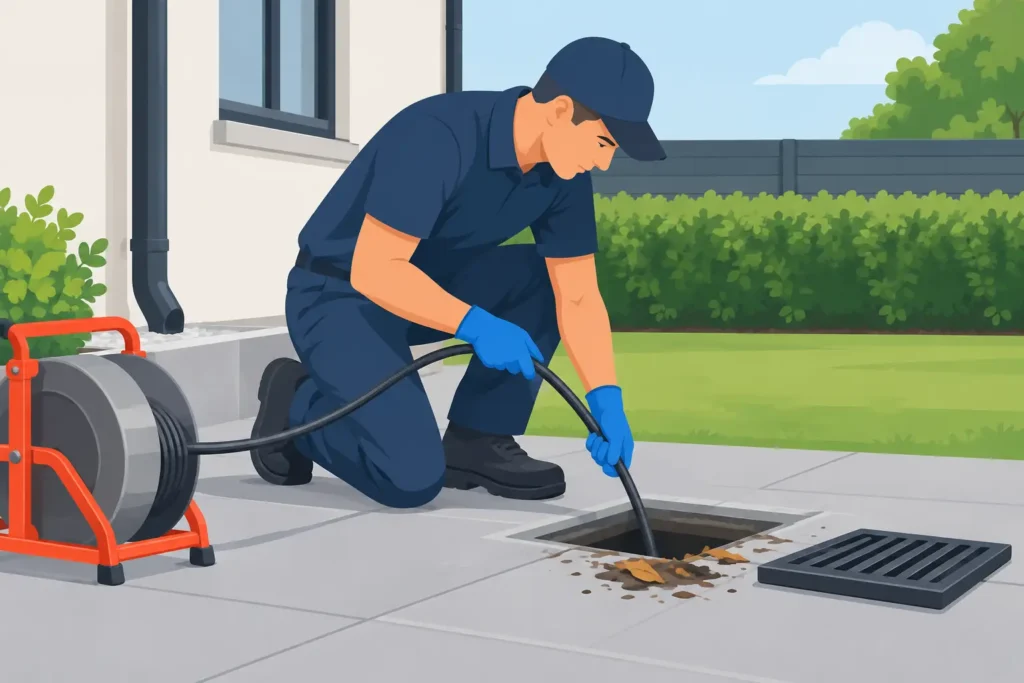
If it is safe to do so, clear loose leaves, mud, litter and moss from the drain grate with gloved hands. Surface debris is often the visible part of the problem, particularly after windy weather or when nearby trees are shedding heavily. Put the debris in a bag rather than sweeping it into another gully.
Keep the area clear and make a note of what you can see. A photo of the affected gully, inspection chamber or overflowing area can help a drainage professional assess the likely issue before arriving. It also helps establish whether the water is clean rainwater, grey water or sewage.
Avoid these common mistakes:
- Do not pour chemical drain cleaners into an outside drain, especially where water is already standing. They may not reach the blockage and can create a hazard for anyone working on the drain.
- Do not force rods into pipework if you are unsure of the direction or condition of the run. Incorrect use can compact debris, damage older pipework or leave equipment stuck.
- Do not leave a lifted inspection cover unattended. Covers are heavy, and an open chamber presents a serious trip and fall risk.
- Do not use a domestic pressure washer down the drain pipe. Surface cleaning equipment is not a substitute for professional drain jetting and may force contaminated water back towards you.
What commonly blocks outside drains?
Outside drains collect far more than rainwater. On homes across London, a typical blockage is a mixture of leaves, roof moss, soil, grit and garden debris washed into gullies over time. Patios, driveways and paths that sit below trees can fill quickly during autumn or after a storm.
Fat, food waste, wipes and sanitary products can cause a different type of blockage when they enter the drainage system from indoors. Even products labelled as flushable do not always break down as expected. In rented properties and commercial settings, repeated backups may point to usage issues as well as a physical obstruction.
Roots are another possibility, especially around mature gardens or older properties. Roots can enter joints or small defects in pipework, then catch debris until the pipe narrows or blocks. A professional clearance may restore flow, but recurring root-related problems can need further investigation to establish the pipe’s condition.
There is also a difference between a blocked gully close to the surface and a blockage deeper in the line. The first may be cleared by removing compacted debris around the trap. The second often needs drainage rods, high-pressure jetting or camera inspection, depending on the symptoms and access available.
How professional emergency outside drain unblocking works
A proper emergency visit begins with an assessment, not a one-size-fits-all response. The operative checks which drains are affected, where water is backing up and whether the issue appears to be local to the property or further along the system. This avoids treating the visible symptom while missing the real obstruction.
Where access is safe, the drain cover or gully is opened and cleared of loose material. The drainage run can then be worked through with suitable equipment to break up and remove the blockage. Jetting is effective for stubborn accumulations of silt, grease and debris, but it must be used at the right pressure and in the correct direction for the pipework.
Once flow is restored, the area should be rinsed down and left orderly. It is worth checking that water is travelling freely through the drain rather than simply disappearing from the chamber temporarily. If the blockage returns quickly, or if the drain cannot be cleared as expected, a camera survey may be the sensible next step. It can identify root ingress, collapsed sections, displaced joints or other defects without unnecessary excavation.
Responsibility can depend on where the blockage is located. A private drain serving only one property is often the owner’s responsibility, while a shared drain or public sewer may fall under the relevant water company. The drainage layout, property type and location of the issue all matter, so it is best not to assume before the line has been assessed.
Reducing the risk of another blockage
The best prevention is regular, practical maintenance. Clear leaves and moss from gully grates before they have time to compact, particularly after storms and through autumn. If roof valleys, gutters or nearby paving regularly shed debris towards a drain, keeping those areas maintained will reduce what reaches the pipework.
Do not wash thick mud, cement residue, paint, plaster or garden waste into outside drains. These materials can settle in bends and chambers, where a small build-up gradually becomes a full obstruction. For kitchens and commercial premises, keeping fats, oils and food scraps out of the drainage system makes a real difference too.
For properties with known drainage issues, scheduled checks are often more cost-effective than waiting for another overflow. This is particularly useful for landlords between tenancies, busy small businesses and homes surrounded by mature trees. A drain that looks clear at ground level can still be narrowing below the surface.
Getting help quickly without guesswork
When time is short, clear information helps arrange the right response. Send photos of the affected drain or standing water, your postcode and a brief description of what has happened. Mention whether water is entering the property, whether sewage is visible and whether more than one drain is affected.
Crown Clean London provides emergency exterior drain support with a straightforward assessment and clear communication, helping property owners in North London and nearby areas act quickly when drainage problems interrupt daily life. The priority is to restore safe flow, contain the mess and leave the exterior tidy once the work is complete.
A blocked drain is unpleasant, but early action usually prevents the worst of the disruption. Keep water use to a minimum, protect the area from foot traffic and arrange a proper assessment before a small backup becomes a flooded entrance, damaged surface or difficult clean-up.