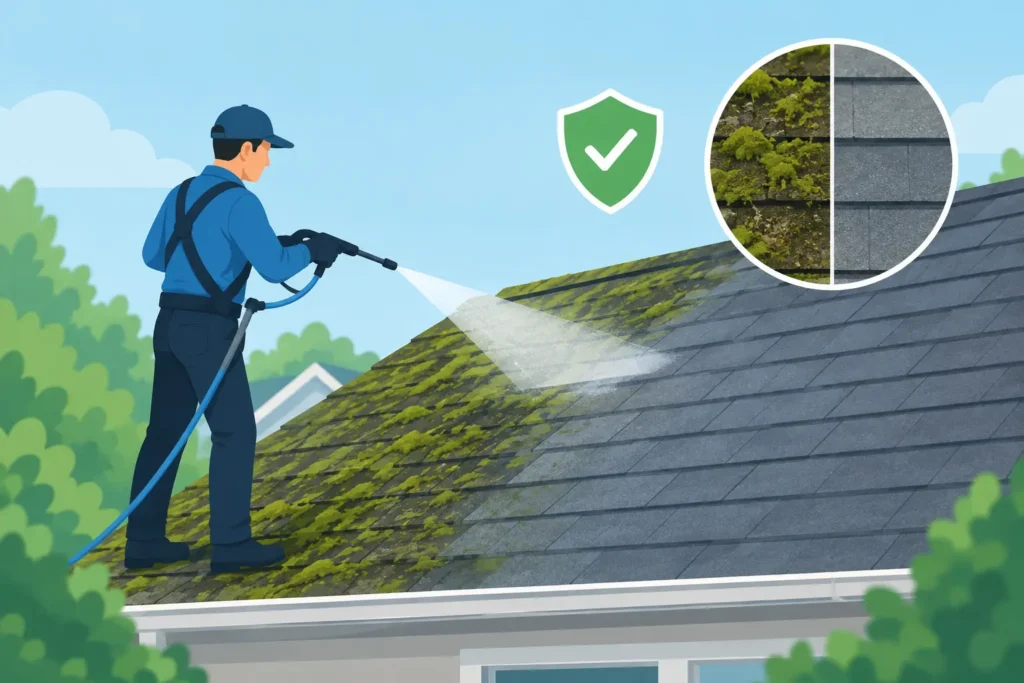
A roof can look tired long before it is structurally worn out. Moss along the tile edges, dark algae streaks and lichen patches can make an otherwise well-kept property appear neglected. More practically, heavy growth holds moisture, sheds into gutters and can affect how freely rainwater runs off the roof. Soft washing for roof moss removal is designed to deal with that growth without using aggressive pressure where it does not belong.
For most tiled roofs, the aim is not simply to make everything look cleaner on the day. It is to remove built-up moss carefully, treat the remaining spores and leave the roof, gutters and surrounding areas properly cleared afterwards.
What soft washing does differently
Soft washing uses low-pressure application and a roof-suitable cleaning treatment, rather than blasting the surface with a pressure washer. The treatment is applied in a controlled way to target moss, algae and lichen. It works into the growth and helps break down the biological staining that causes a roof to look patchy or green.
This matters because roof tiles, pointing, flashings and membrane systems are not all designed to withstand high-pressure cleaning. A powerful jet can dislodge loose mortar, disturb ageing tiles, force water where it should not go, or strip surface finishes from certain materials. Even when a roof initially looks bright after pressure washing, the method may create avoidable risk if it has not been selected for that particular surface.
Soft washing is not a quick cosmetic rinse. It is a surface-specific cleaning method that prioritises controlled treatment over force. Some staining lifts promptly, while other areas continue to lighten as the treatment does its work over time. That is normal, particularly with well-established lichen.
Is soft washing for roof moss removal safe?
When carried out after a proper assessment, soft washing is generally a safer choice for many roof types than high-pressure washing. The key word is assessment. A sound concrete tile roof calls for a different approach from a fragile slate roof, an older clay tile roof or a roof with visible defects.
Before work starts, the condition of the roof should be considered alongside the level of moss, access requirements, nearby planting and the state of the gutters. Loose or broken tiles, damaged ridge pointing, deteriorated flashings or signs of an existing roof issue should be identified rather than hidden beneath a cleaning treatment. Cleaning can improve the condition and appearance of the surface, but it is not a substitute for repairing defects.
A careful team also protects the areas below. Downpipes may need managing during treatment, gutters should be cleared of released debris, and plants, paths, windows and garden furniture need attention. The difference between a proper roof clean and a rough wash is often visible in these details once the work is finished.
Why moss should not be left to build up
A light amount of moss is common on London roofs, especially where trees create shade or where north-facing slopes stay damp. It does not automatically mean a roof is failing. However, allowing thick growth to remain year after year can create several practical problems.
Moss retains water against the tile surface. In colder weather, repeated wetting and freezing can put added stress on vulnerable areas. As it spreads, moss can lift slightly at tile edges and create pockets where leaves, grit and debris collect. When rain eventually washes this material down, gutters and downpipes can block more easily.
There is also the safety and presentation issue. Moss falling onto paths, patios or driveways can create slippery patches. For landlords, managing agents and small-business owners, a visibly moss-covered roof can make a property look poorly maintained before anyone has stepped through the door.
The right time to act depends on the roof. A few isolated patches may only need monitoring, while a roof with thick cushions of moss, dark staining and overflowing gutters is better dealt with before the next wet season adds to the problem.
The careful process behind a better result
A professional soft-wash service should begin with a clear view of the roof and its surroundings. Photos can often help establish the likely scale of work and allow a clear quote to be prepared before booking. On arrival, the final approach should still reflect the condition seen on site.
Where moss is substantial, loose material is usually removed carefully first rather than being driven into gutters or scattered across the garden. The roof is then treated with an appropriate biocide solution at low pressure. This helps tackle the remaining biological growth that cannot be fully removed by hand alone.
The treatment needs time to work. Fresh moss and algae often change appearance quickly, but older lichen can be more stubborn. It may fade gradually as weathering releases the treated growth. Trying to force an instant result with excessive pressure is precisely what a soft-wash approach is intended to avoid.
Gutters are then checked and cleared of debris released during the clean. Paths, patios, walls and windows below the roofline should be rinsed or tidied as needed. A finished job should leave the property looking cared for, not simply move the mess from the roof to the ground.
Not every roof needs the same treatment
There is no one-method-fits-all answer to roof cleaning. Concrete tiles often respond well to careful moss removal and biocide treatment, but their condition still matters. Clay tiles can be more delicate, particularly on older properties, while natural slate needs an especially considered approach because individual slates may be brittle or secured in a way that does not tolerate unnecessary disturbance.
That is why the lowest possible pressure is not the same as no risk. Safe working access, correct application rates and sensible judgement are all part of the job. If a roof is visibly damaged, extremely fragile or beyond a cleaning-only solution, the responsible advice may be to address those concerns before arranging treatment.
It also depends on what you want from the service. If your main concern is blocked gutters and falling moss, removal and clearance may be the priority. If the roof is broadly clear but carries dark algae staining, a biocide treatment may be more relevant. A good recommendation should match the surface and the problem, rather than defaulting to the same equipment every time.
How long will the result last?
No honest roof cleaner can promise that moss will never return. Roofs are exposed to rain, airborne spores, nearby trees and changing shade throughout the year. A roof beneath overhanging branches will usually regrow moss faster than one in open sunlight.
Biocide protection helps slow regrowth by dealing with the spores and biological residue left behind after visible moss removal. Its lasting effect varies with the roof material, local environment, weather exposure and how much organic debris lands on the roof. Keeping gutters flowing and trimming back branches where appropriate can also reduce the damp, shaded conditions moss prefers.
For many properties, periodic checks are more useful than waiting for a heavy build-up. Spotting early growth, gutter debris or overflowing outlets makes maintenance simpler and helps preserve the clean, sharp appearance achieved by the initial treatment.
Choosing a roof cleaning service with care
Ask how the roof will be cleaned, not just whether it will be cleaned. A clear answer should explain the proposed method, why it suits your roof and what will happen to moss and debris during the work. It should also cover access, protection for plants and external surfaces, gutter clearance and the expected appearance once treatment has been applied.
At Crown Clean London, the focus is on surface-safe methods, clear communication and tidy completion. For homeowners and property managers in Wembley, Harrow and nearby North London areas, sending photos and a postcode is a straightforward way to start with an assessment that reflects the roof in front of you.
A cleaner roof is not only about kerb appeal. Treated carefully, it can reduce loose debris, support better gutter flow and help you stay ahead of the small exterior issues that are easier to handle before they become a bigger job.