
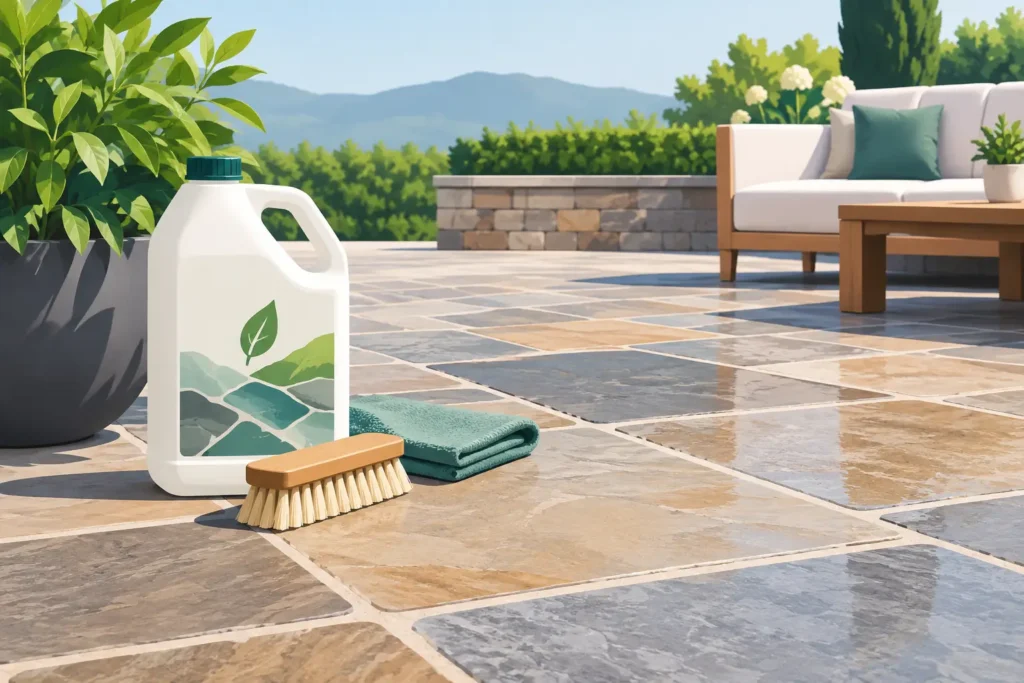
A patio can look tired long before the stone itself is worn out. Green algae, black spotting, leaf tannins and ingrained traffic dirt can mask the natural colour completely. The best cleaner for natural stone patio areas is therefore not simply the strongest product on the shelf. It is the cleaner and method that remove the contamination without etching, bleaching or weakening the particular stone beneath it.
Natural stone is not one material. Limestone, sandstone, slate, granite and travertine all react differently to water pressure, chemicals and repeated scrubbing. Choosing the wrong treatment may create pale patches, roughen the surface or leave staining behind in the pores. A careful approach delivers a cleaner, safer patio while helping it continue to weather well.
What is the best cleaner for a natural stone patio?
For regular cleaning, a pH-neutral stone cleaner is usually the safest starting point for most natural-stone patios. It is formulated to lift everyday grime without the aggressive acids or high alkalinity that can damage sensitive stone. Use it with clean water, a soft-to-medium outdoor brush and controlled rinsing rather than heavy saturation.
However, the right cleaner depends on what is actually on the patio. A neutral cleaner will deal well with general dirt and light surface marks, but it will not always solve established algae, lichen, black spot or deep organic staining. Those issues often need a separate, stone-suitable biocide treatment after the surface has been cleaned.
The key point is simple: match the product to both the stone and the staining. A cleaner that works well on dense granite may be too harsh for a soft, porous limestone or sandstone slab.
For algae, moss and slippery green growth
Patios in shaded gardens, beneath trees or close to damp borders often develop algae and moss. This is more than a cosmetic concern. Once wet, biological growth can make paths and seating areas slippery.
A suitable exterior biocide can treat the remaining spores after the main clean. Unlike a quick cosmetic wash, it continues to work as the surface dries and helps slow regrowth. Results vary with shade, drainage, surrounding vegetation and the stone’s porosity, so no treatment should be presented as permanent. Keeping leaves and soil off the paving will make a meaningful difference.
For black spot and stubborn organic marks
Black spot is particularly common on sandstone and other porous paving. It can be slow to shift because the growth sits within the surface rather than only on top of it. A purpose-made stone-safe treatment, enough dwell time and repeat applications may be required.
Avoid trying to force the result with an overly aggressive pressure washer. It may remove some visible marks quickly, but it can also open the stone’s surface, making it more likely to hold water and dirt afterwards. The patio can look clean for a short period, then weather unevenly.
For rust, oil or barbecue stains
Mineral stains and oil marks need a more targeted product than general patio wash. Rust removers, degreasers and poultice-style stain treatments can be effective, but only where they are confirmed suitable for the stone type. Always test a small hidden area first, particularly on pale limestone, honed stone or slabs with a mixed natural colour.
Fresh oil should be blotted rather than rubbed further into the pores. Do not reach immediately for washing-up liquid, strong degreaser or an acidic cleaner. These household solutions may leave a larger tide mark than the original spill.
Cleaners and methods to avoid on natural stone
The most common patio-cleaning mistakes come from treating natural stone like concrete block paving. Stone can be durable, but its finish is often far less forgiving.
Avoid acidic products such as brick acid, patio acid, vinegar and many limescale removers. These can react with calcareous stones, especially limestone, marble, travertine and some sandstones, causing etching or a dull, patchy finish. Acid damage is not always obvious while the patio is wet, which makes it an expensive mistake.
Strong bleach is also a poor default choice. It may lighten organic staining temporarily, but can affect surrounding planting, discolour sensitive stone and fail to deal with the underlying cause of regrowth. Mixing chemical products is unsafe and should never be attempted.
High-pressure cleaning needs judgement too. Pressure washing is not automatically wrong for stone, but a close nozzle, excessive pressure or inconsistent technique can scar the surface and strip away soft jointing material. The risk is greater with older, friable sandstone and limestone. A surface-specific setting, sensible working distance and even passes matter far more than raw power.
How to clean a natural stone patio safely
Start by removing furniture, pots, loose leaves and soil. Sweep thoroughly, paying attention to edges and joints where damp debris collects. This simple preparation stops grit from being dragged across the stone while brushing.
Wet a small test area first and apply the chosen cleaner according to its instructions. Let it sit for the recommended time, but do not allow it to dry onto the surface. Agitate lightly with a suitable brush, then rinse in a controlled way. On a large patio, work in manageable sections so the cleaner does not dry before rinsing.
Once the stone is clean, assess what remains. Some darker areas may be natural variation in the slabs rather than staining. Others may need a focused treatment for algae, black spot, rust or oil. Trying to make every slab the same colour can lead to over-cleaning and an unnatural-looking finish.
Allow the patio to dry properly before deciding whether it needs sealing. Sealer is not a cure for staining or damp problems, and applying it over contamination can trap the issue in place. Where a sealer is appropriate, choose one designed for that stone and finish. Some products deepen the colour, while others aim to preserve a more natural appearance.
Why professional assessment is worth it for older stone
On a small, lightly soiled patio, careful routine cleaning may be all that is needed. The decision becomes less straightforward when paving is old, heavily stained, loose, previously sealed, or made from several types of stone. There may also be fragile pointing, drainage issues or areas where water sits after rain.
A professional clean should begin with an assessment of the surface rather than a one-method approach. At Crown Clean London, this means considering the stone type, level of biological growth, access, joint condition and nearby planting before choosing between soft washing, controlled pressure cleaning and follow-up biocide protection.
This approach is especially useful for London patios that spend much of the year in shade or receive limited airflow between fences, walls and garden buildings. The aim is not to blast the surface until it looks pale. It is to remove the dirt and growth responsibly, bring back the stone’s character and leave the area tidy and ready to use.
Keeping the patio cleaner for longer
After cleaning, a little routine attention reduces the need for intensive treatment. Sweep leaves before they break down, trim back plants that keep the paving damp, and make sure soil from borders is not washing across the slabs. Check that gullies and drainage channels are clear so rainwater can move away rather than pooling on the patio.
If green growth returns in one corner repeatedly, look beyond the cleaner. The cause may be a leaking planter, blocked drainage, dense overhanging foliage or a permanently shaded area. Solving that condition can be more valuable than applying stronger chemicals every few months.
For the best result, choose a stone-safe cleaner for routine dirt, use specialist treatments only for the stain or growth you are dealing with, and avoid harsh shortcuts. If the stone is delicate, heavily marked or you are unsure what has been applied before, send clear photos and your postcode for an informed assessment before the cleaning starts.