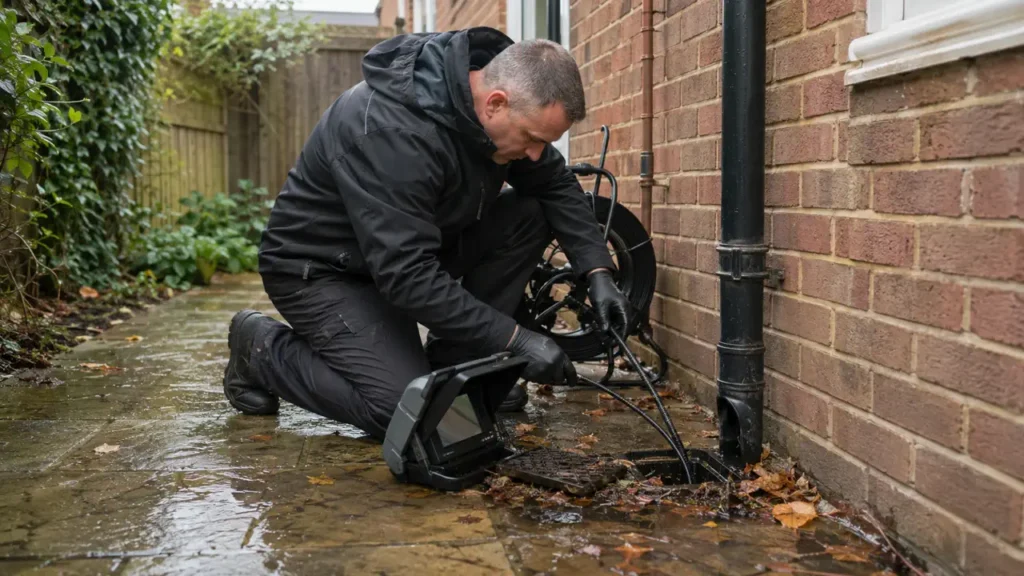
A blocked drain can start as a minor inconvenience and quickly become a much more urgent problem. A sink may begin draining more slowly than normal, an unpleasant smell may appear around a drain, or a toilet may become increasingly difficult to flush.
Common signs of a blocked drain include slow drainage, difficulty flushing toilets, unpleasant drain smells, wastewater backing up and repeated drainage problems. If wastewater is beginning to return through a toilet, sink or other outlet, the blockage should be investigated quickly.
This guide explains the warning signs to look for, some common causes of blocked drains and when professional drain unblocking may be needed at a London property.
What Are the Main Signs of a Blocked Drain?
Drain blockages do not always cause an immediate overflow. In many cases, there are earlier warning signs that wastewater is no longer moving through the pipe normally.
Look out for:
- Sinks or baths draining much more slowly than usual
- A toilet becoming difficult to flush
- Persistent unpleasant smells coming from drains
- Wastewater backing up through sinks or toilets
- Several drainage points developing problems at the same time
- Outdoor drains holding wastewater instead of clearing normally
- A blockage that disappears temporarily but keeps returning
Thames Water lists slow drainage, difficulty flushing and unpleasant smells among the warning signs that a pipe may be blocked.
You can read its official guidance on blocked drains and sewers.
1. Your Sink or Bath Is Draining Slowly
A sink or bath that suddenly takes much longer to empty is one of the most common early signs that water flow is being restricted.
A small amount of local debris may affect only one fixture. However, if several sinks, baths or other drainage points begin emptying slowly, the restriction may be further along the drainage system.
Do not ignore a drainage problem simply because water is still moving. A partial blockage may allow some wastewater through while continuing to accumulate material over time.
2. Your Toilet Is Becoming Difficult to Flush
A toilet that struggles to flush properly can indicate restricted drainage.
One unsuccessful flush does not automatically mean there is a serious blockage, but repeated difficulty should be investigated, especially when it happens alongside slow sinks or other drainage problems.
If several fixtures are affected together, the problem may involve a shared section of pipe rather than one individual appliance.
3. There Is a Persistent Bad Smell From the Drain
Persistent unpleasant smells from sinks, drains or other wastewater outlets can be another warning sign.
Organic material, food waste, fats and other substances trapped within pipework can contribute to unpleasant odours as they accumulate.
Thames Water specifically identifies bad smells from drains as one possible sign of a blockage.
If the smell continues despite normal cleaning, particularly when combined with slow drainage, it is worth checking whether there is a deeper drainage problem.
4. Wastewater Is Backing Up
Wastewater returning through a sink, toilet or another outlet is a more urgent warning sign.
When a blockage prevents wastewater from continuing through the pipe, the water may have nowhere to go and can begin moving back towards the property.
Thames Water warns that blocked wastewater can return through toilets or sinks and potentially flood a home.
If wastewater is actively backing up, avoid continuing to run taps, showers, washing machines or other appliances that send additional water into the affected drainage system until the problem has been assessed.
For urgent drainage problems, Crown Clean London provides emergency drain unblocking in London.
5. Several Drains Are Having Problems at the Same Time
One slow sink may indicate a local restriction close to that fixture. Problems appearing at several drainage points can indicate that the blockage is located further along the pipework.
For example, pay more attention if you notice a combination such as:
- A slow kitchen sink
- A toilet that is difficult to flush
- A bath or shower draining slowly
- An outdoor drain that is not clearing
The location of the symptoms can help determine which section of drainage may need investigation.
6. An Outdoor Drain Is Not Clearing Normally
Outdoor drainage points should normally allow wastewater to continue through the drainage system.
If you notice wastewater remaining around an inspection point or drain for longer than expected, or the level rises when water is used inside the property, there may be a restriction further along the system.
Do not remove inspection covers or enter confined drainage spaces unless you have the appropriate knowledge and equipment.
7. The Same Drain Keeps Blocking Again
A blockage that repeatedly returns deserves further investigation.
Temporary improvement does not necessarily mean the cause has been fully removed.
Recurring drainage problems could indicate:
- Material remaining inside the pipe
- Repeated disposal of unsuitable waste
- A problem further along the drainage system
- Damage or another defect requiring investigation
If you repeatedly need to clear the same drain, identifying the cause is usually more useful than continuing to treat only the immediate symptom.
What Commonly Causes Blocked Drains?
Many domestic drain blockages are caused by materials entering the drainage system that should have been disposed of elsewhere.
Common causes include:
- Cooking fats, oils and grease
- Food scraps
- Wet wipes
- Sanitary products
- Other items that should have been placed in a bin
Thames Water advises that toilets should only be used for the three Ps: pee, poo and toilet paper. Other items should be disposed of appropriately rather than flushed.
Why Do Fats, Oils and Grease Block Drains?
Cooking fat and oil may be liquid while warm, but that does not mean it is safe to pour down a sink.
As fats, oils and grease cool inside drainage pipes, they can harden and begin accumulating on the internal surface of the pipe.
They can then combine with food particles and other waste to create increasingly serious restrictions.
Thames Water advises allowing cooking fat to cool before disposing of it through an appropriate waste route rather than pouring it down the drain.
You can read the Thames Water guidance on fats, oils and grease.
Can Wet Wipes Block Drains?
Yes. Wet wipes are a major drainage problem because they do not behave like toilet paper once flushed.
They can accumulate inside pipes and combine with fats and other materials, contributing to larger blockages.
The safest household rule is simple: place wipes in the bin rather than flushing them.
Who Is Responsible for a Blocked Drain?
Before arranging work, it can be useful to understand whether the blocked section is likely to be private drainage or part of the public sewer system.
Ofwat explains that householders or landlords are normally responsible for drains carrying household waste up to the point where they connect with the public sewer, although responsibility can vary depending on the layout of the drainage system.
Sewerage companies are generally responsible for public sewers.
You can read the Ofwat guidance on responsibility for drains and sewers.
How Can You Tell Whether the Blockage May Be Private?
According to Thames Water, a blockage may be within private drainage when:
- Only your property is experiencing the problem
- Your property does not share the affected drain with another property
- There is no similar flooding or drainage problem nearby
- The problem appears to be within internal pipework
If neighbouring homes are having similar problems or the issue appears to involve a public sewer, the relevant water company may need to investigate instead.
When you are unsure, checking the responsibility before paying for unnecessary private work can save time.
When Is Drain Unblocking an Emergency?
Some slow drains can be investigated before they become severe. Other situations deserve much faster attention.
Arrange urgent help when:
- Wastewater or sewage is backing up into the property
- A toilet cannot be used normally
- Several essential drains are affected
- Wastewater is overflowing outside
- The blockage is creating an immediate risk of internal flooding
- The problem is rapidly becoming worse
The priority is to prevent additional wastewater from entering an already restricted drainage system while arranging appropriate help.
What Should You Do While Waiting for a Blocked Drain to Be Cleared?
- Reduce water use. Avoid sending unnecessary additional wastewater into the affected system.
- Do not keep repeatedly flushing a blocked toilet. This can increase the risk of overflow.
- Keep people away from contaminated wastewater. Sewage should be treated as contaminated material.
- Identify which fixtures are affected. This information can help when explaining the problem.
- Check whether neighbouring properties are affected. This may help indicate whether the issue extends beyond your private drain.
- Contact the appropriate drainage service or water company. Which one is appropriate depends on where the blockage is located.
Should You Use Chemical Drain Cleaner?
A chemical product is not automatically the correct solution for every blocked drain.
A small local restriction inside a household fitting is different from a significant blockage further along an external drainage system.
Repeatedly adding chemicals without knowing the cause can also make later work more difficult and may be inappropriate for some plumbing systems.
If the drainage problem is significant, recurring or affecting several fixtures, professional investigation is generally more useful than repeatedly trying different products without identifying where the blockage is located.
Can You Prevent Drain Blockages?
Not every drainage problem can be prevented, but many common household blockages are avoidable.
Good habits include:
- Do not pour cooking fats, oils or grease down the sink
- Put food scraps in the appropriate waste container
- Do not flush wet wipes
- Do not flush sanitary products
- Use sink strainers where appropriate to catch food waste
- Deal with recurring slow drainage instead of waiting for a complete blockage
Preventing unsuitable material from entering pipes is usually much easier than removing it after a blockage has formed.
Drain Unblocking Across London
Crown Clean London provides exterior cleaning and drainage services throughout London and selected surrounding locations.
You can check the full Crown Clean service area or provide your postcode when contacting us.
Need Help With a Blocked Drain in London?
If your drains are emptying slowly, a toilet is becoming difficult to flush or wastewater is beginning to back up, dealing with the problem early can help prevent a more serious drainage emergency.
Crown Clean London provides professional drain unblocking in London for suitable private drainage problems.
Send your postcode together with details of what is happening, which drains are affected and when the problem started.
Contact Crown Clean London about a blocked drain.
Frequently Asked Questions
What are the first signs of a blocked drain?
Slow-draining sinks or baths, difficulty flushing a toilet and persistent unpleasant drain smells are common early warning signs. Wastewater backing up can indicate a more serious restriction.
How do I know if my drain is seriously blocked?
A blockage is more urgent when several fixtures stop draining normally, wastewater begins backing up or there is a risk of sewage overflowing into the property.
Can cooking oil block a drain?
Yes. Fats, oils and grease can cool and harden inside pipework, where they combine with other waste and contribute to blockages.
Can you flush wet wipes down the toilet?
Wet wipes should be placed in the bin rather than flushed. They can accumulate inside drainage and sewer systems and contribute to blockages.
Who is responsible for a blocked drain?
Responsibility depends on where the blockage is located. Private drains serving an individual property are normally the responsibility of the homeowner or landlord, while public sewers are normally maintained by the sewerage company.
Should I call a drain unblocker if only one sink is slow?
Not necessarily. A single slow sink may have a local restriction. However, if the problem persists, repeatedly returns or begins affecting several drainage points, further investigation is sensible.
What should I do if sewage starts backing up?
Reduce water use, avoid adding more wastewater to the affected system and arrange urgent investigation. Keep people and pets away from contaminated wastewater.
Does Crown Clean provide emergency drain unblocking near me?
Crown Clean London provides drain unblocking services across London and selected surrounding locations. Send your postcode and details of the problem to confirm coverage.