
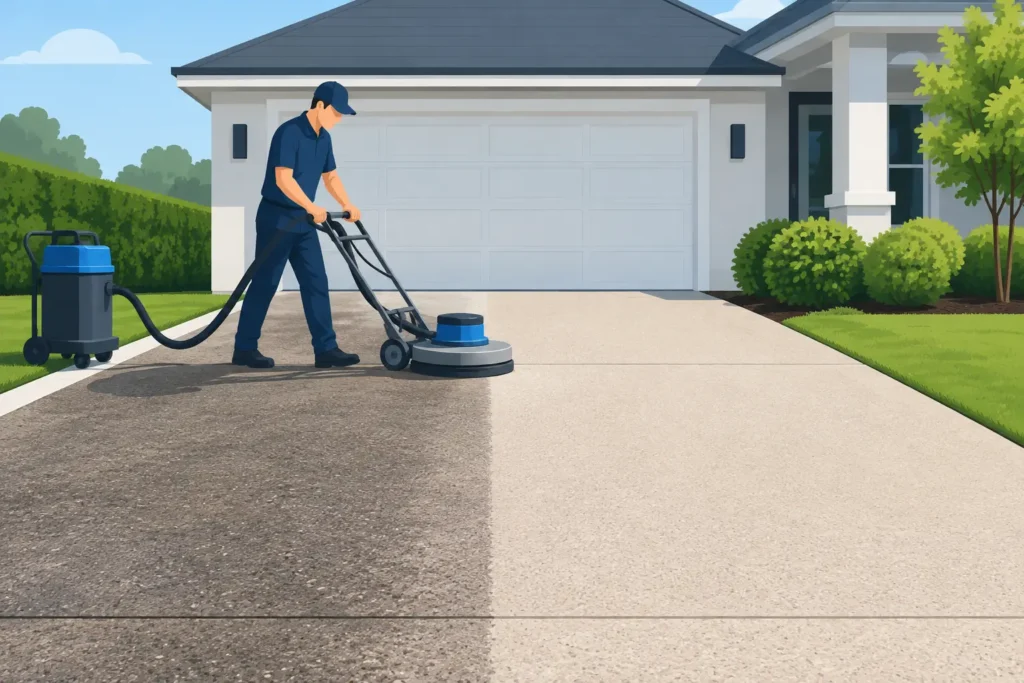
A block-paved driveway can look tired long before the paving itself has reached the end of its life. Moss in the joints, tyre marks, dark algae and missing kiln-dried sand can make an otherwise sound entrance look neglected and feel less secure underfoot. A professional driveway cleaning and re-sanding service deals with both the visible dirt and the joints that help hold block paving in place.
For homes, rental properties and small business premises, the difference is not just cosmetic. Cleaning removes slippery growth and embedded grime, while correctly re-sanding stabilises the surface after washing. The result is a cleaner, sharper driveway that is properly finished rather than simply blasted with water and left to dry.
Why cleaning alone is not enough
Block paving is designed as an interlocking surface. The paving blocks sit on a prepared base, while the sand brushed into the joints helps them resist sideways movement. Over time, rain, traffic, sweeping, weeds and previous cleaning can reduce the level of jointing sand.
Pressure washing is highly effective at lifting dirt from the face of the blocks, but it can also remove loose or contaminated sand from the joints. That is normal and often necessary, particularly where the joints are packed with moss, soil or weeds. The important next step is to replace the sand once the driveway is clean and fully dry.
Skipping this stage can leave joints open and vulnerable to movement. Water and debris may settle more easily between blocks, weeds can return sooner, and individual paving blocks may begin to shift under vehicle weight. Re-sanding is therefore not an optional extra for most block-paving cleans. It is part of completing the job properly.
What a driveway cleaning and re-sanding service involves
The right approach depends on the material, its condition and the source of the staining. A driveway with light surface algae needs a different treatment from one with years of black spotting, oil marks, deep-set moss or unstable edging.
Assessment before washing
A careful service starts by checking the paving type, joint condition, drainage points and any damaged or loose blocks. This helps determine the suitable cleaning pressure, nozzle, detergents and technique. Excessive pressure used too close to the surface can damage softer materials, disturb joints unnecessarily or leave visible striping.
Attention should also be given to surrounding areas. Drain covers, planted borders, garage thresholds and nearby walls need to be considered before work begins. A tidy setup protects the property and makes sure wash water and debris are managed sensibly.
Removing moss, algae and surface grime
Moss and algae are more than an appearance issue. When wet, they can make paving slippery, particularly on shaded driveways or paths leading to the front door. Cleaning lifts this growth along with general traffic film, mud, leaf staining and accumulated dirt.
For many block-paved surfaces, professional pressure washing provides the visible transformation people expect. However, the machine is only one part of the process. The operator needs to use the appropriate pressure and working distance for the paving, rather than treating every surface in the same way.
Stubborn biological growth may benefit from a suitable treatment before or after cleaning. This can help improve the finish and slow the return of green growth, although no outdoor surface can be promised to stay completely free from weathering forever. Shade, trees, poor drainage and regular vehicle use all affect how quickly a driveway becomes dirty again.
Allowing the paving to dry
This stage is easy to overlook. Kiln-dried sand must be applied to dry paving and dry joints so it can fall into the gaps correctly. If the driveway is still damp, the sand can cling to the surface, bridge over joints or become patchy rather than settling where it is needed.
Drying time varies with the weather, the time of year and how shaded the driveway is. On a clear, breezy day, the surface may dry relatively quickly. After rain or during colder conditions, re-sanding may need to wait. This is not a delay for its own sake – it is what gives the jointing sand the best chance of doing its job.
Re-sanding the joints
Once dry, clean kiln-dried sand is spread across the block paving and brushed into the joints. The aim is to fill them evenly, not simply leave a dusty layer over the surface. More than one pass may be needed as the sand settles.
The finished joints should look filled and consistent, while the face of the blocks is swept clear. This gives the driveway a more cared-for appearance and restores the support between the paving units. Where blocks are already loose, sunk or badly displaced, re-sanding alone may not correct the underlying base issue. Those areas should be identified clearly before work starts.
Problems that need a different solution
A clean driveway can reveal defects that dirt previously hid. That is useful, but it also means expectations should be realistic. Cleaning and sanding can greatly improve the appearance and stability of sound block paving, but they are not a substitute for repairs where the paving structure has failed.
Oil stains, for example, may lighten substantially but can remain visible depending on how long they have been present and how deeply they have penetrated. Rust marks, paint spills and cement residue may need specialist treatment, and some marks cannot be fully removed without affecting the paving itself.
Standing water is another warning sign. If water repeatedly pools in the same place, the issue may relate to levels, compacted ground, blocked drainage or a localised dip in the paving. Cleaning the surface is still worthwhile, but the drainage cause should be considered if the problem keeps returning.
Likewise, broad weeds growing through wide gaps can indicate lost jointing sand, while isolated weeds may simply be seeds that have settled in surface debris. A thorough clean removes the growing medium, but regular sweeping and prompt treatment of new growth will help preserve the result.
How long will the finish last?
There is no single answer because every driveway faces different conditions. A sunny, open driveway with good drainage and regular sweeping often stays presentable longer than one beneath trees or on the north side of a property. Vehicles, pets, nearby construction dust and local weather all play a part.
As a practical guide, ongoing care makes the greatest difference. Remove leaves before they break down, sweep loose soil from the paving, avoid allowing moss to establish in shaded corners and keep drainage channels clear. If a few joints lose sand over time, topping them up early is easier than waiting for widespread movement.
A protective treatment may suit some paving types and circumstances, but it should never be applied automatically. The surface needs to be clean, dry and appropriate for the product, and any treatment should be selected with the block material, jointing method and desired finish in mind. A surface-specific assessment is more useful than a one-size-fits-all recommendation.
When to arrange driveway cleaning
Spring and autumn are popular times because winter moisture encourages moss and algae, while falling leaves create staining and debris. That said, a driveway can be cleaned whenever conditions allow and the surface can dry sufficiently for re-sanding.
It is sensible to arrange work before the driveway becomes slippery, before visitors or tenants arrive, or when preparing a property for sale or letting. For landlords and property managers, a well-finished entrance can make a meaningful difference to first impressions without altering the character of the property.
A straightforward way to get the right quote
The most useful starting point is to send clear photos of the driveway along with your postcode. Include wider shots to show the size and access, plus close-ups of moss, stains, loose blocks or problem areas. This allows the condition of the surface to be assessed and helps provide a clear quote without unnecessary back-and-forth.
Crown Clean London carries out driveway cleaning with the condition of the paving in mind, not just the initial visual impact. The work should leave the area clean, joints properly addressed and the surrounding space tidied at completion.
A driveway does not need to be perfect to deserve proper care. If the paving is sound but looks dark, green or patchy, cleaning followed by careful re-sanding can bring back the neat, solid finish that makes the whole front of a property feel looked after.