Those stubborn black marks on a patio or driveway are rarely just surface dirt. If you are searching for how to remove black spots from paving, the answer depends on what has caused them and what material sits beneath them. A quick blast with a pressure washer can improve the appearance temporarily, but it may not deal with the growth itself – and on some paving, it can create a rougher surface that becomes dirty again more quickly.
For a cleaner, more lasting result, identify the staining first, choose a treatment that suits the surface, and allow enough time for it to work.
What are the black spots on paving?
On paving in the UK, black spots are commonly a form of lichen – a tough, crust-like growth that attaches itself firmly to the surface. It is often found alongside green algae, moss and general weather staining, particularly on shaded patios, north-facing paths and driveways beneath trees.
Lichen can look like scattered black dots or flat dark patches. Unlike loose moss, it does not simply sweep away. It anchors to tiny pores and irregularities in the paving, which is why a standard wash may leave black marks behind even when the surrounding area looks clean.
Not every dark mark is lichen. Tyre marks, oil drips, damp staining and mineral deposits need different treatment. Before applying any cleaner, look at the pattern. Random, hard speckles across several slabs are more likely to be lichen. A dark patch beneath a parked car may be oil. Treating the wrong problem with a strong chemical can waste time and put the surface at risk.
Check the paving material before cleaning
The safest way to remove black spots from paving is not the same for every patio or drive. Concrete slabs and block paving are generally more tolerant than natural stone, but even these can be damaged by excessive pressure or harsh products.
Sandstone, limestone and some reconstituted stone need particular care. Acidic cleaners can etch calcareous stone such as limestone, leaving it lighter, rougher or permanently marked. Porcelain paving is less porous and often easier to clean, but its joints, grout and surrounding planting still need protection. Block paving can lose jointing sand if cleaned too aggressively.
If you are unsure what your paving is made from, test any product on a discreet area first. It is a small step that can prevent a much larger repair job.
How to remove black spots from paving step by step
Start by clearing furniture, pots and loose debris from the area. Sweep thoroughly so leaves, soil and grit do not interfere with the treatment. Cover nearby plants where practical, and keep pets and children away until the area has been fully rinsed and dried.
Apply a suitable exterior biocide or specialist lichen treatment according to the manufacturer’s instructions. These treatments are designed to kill the organic growth rather than only strip away its visible top layer. Work on a dry day when rain is not expected immediately afterwards, as heavy rain can dilute the product before it has had time to act.
The treatment needs patience. Green algae may lighten quickly, while established black lichen can take days or weeks to break down fully. On heavily affected paving, a second application may be needed. This is normal: the black marks have built up gradually, and forcing them off in one session is where unnecessary surface damage often occurs.
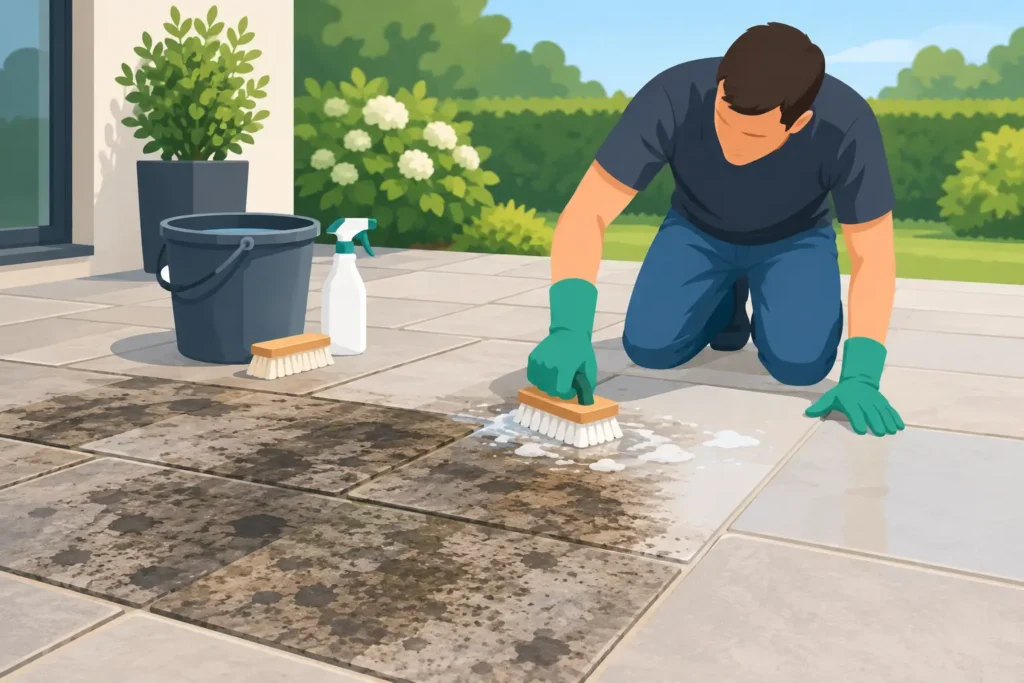
Once the growth has loosened, gently agitate the area with a stiff outdoor brush. Then rinse with clean water, directing runoff away from doors, air bricks and planted areas. A pressure washer can be useful at this stage on suitable concrete or block paving, but use a controlled fan setting rather than a narrow, aggressive jet. Keep the nozzle moving and avoid holding it close to one spot.
For natural stone, soft washing or low-pressure rinsing is usually the more careful approach. The aim is to clean the stone without stripping its face, opening its pores or disturbing the bedding and joints.
Avoid the common pressure-washing mistake
Pressure washing can make a patio look dramatically better, but it is not automatically the best first treatment for black spot lichen. High pressure may remove some visible growth while leaving spores or roots in the pores. It can also scar softer slabs, expose aggregate in concrete, and wash out the sand between block paving.
If you do use a pressure washer, clean in even passes and stand back from the surface. Do not use a pinpoint nozzle on paving. After cleaning block paving, allow it to dry properly and replace any lost kiln-dried jointing sand where required. Well-filled joints help keep blocks stable and reduce places where weeds and debris can settle.
When household cleaners are not the answer
Bleach, washing-up liquid and vinegar are often suggested as quick fixes, but they each have limitations. Washing-up liquid may lift light dirt but is unlikely to remove established lichen. Vinegar can be unsuitable for natural stone and may affect surrounding soil or plants. Bleach can discolour some materials, damage nearby vegetation and create runoff concerns.
A purpose-made exterior biocide is usually the more sensible choice for biological staining, provided it is compatible with the paving and used exactly as directed. It targets the cause of the marks and is easier to apply in a controlled way.
Avoid mixing products. Combining cleaning chemicals can be dangerous and does not make them more effective. If the paving has been sealed, previously treated or repaired with coloured mortar, take extra care and test first.
Dealing with black spots on different areas
A patio often suffers from damp shade, fallen leaves and limited airflow. Trim back overhanging growth where appropriate, keep drainage channels clear and avoid leaving wet pots directly on the paving for long periods. Small changes like these can make a noticeable difference to how quickly staining returns.
Driveways face a different mix of problems. Vehicle deposits, tyre marks and compacted dirt can disguise lichen or make it appear worse. Address oil stains separately before treating the wider surface. On block paving, inspect the joints after cleaning and re-sand if they have been depleted.
Paths near lawns and borders may be exposed to regular soil splash and irrigation. Brush them often, especially through autumn and winter, and prevent water from sitting on the surface. Persistent pooling is worth investigating because it encourages moss, algae and black spot growth while making paving more slippery.
When to call in a professional cleaner
Professional help is worthwhile when black spots cover a large area, the paving is valuable or delicate, or previous cleaning has left uneven results. It is also sensible where access is awkward, drainage needs managing, or you are not confident which product is safe for the surface.
A careful contractor should assess the paving before starting, rather than treating every surface with the same machine setting. The right method may involve soft washing, a compatible biocide treatment, controlled pressure cleaning, or a combination of these. The best approach is based on the paving material, its condition and the type of staining present.
For homeowners and property managers across North London, Crown Clean London can assess exterior surfaces from photos and a postcode before arranging a clear quote. This is particularly useful for larger patios, shared paths and driveways where a tidy, even finish matters as much as the initial clean.
Keeping black spots from returning quickly
No outdoor paving stays spotless forever, especially through a damp British winter. However, regular light maintenance can greatly slow down the return of black spots. Sweep leaves and soil before they break down, keep gutters and drainage routes clear, and remove moss early rather than waiting for it to spread.
A periodic biocide treatment can also help suppress organic regrowth after a thorough clean. How often it is needed depends on shade, nearby trees, foot traffic and the porosity of the paving. A bright, open porcelain patio may need very little attention, while a shaded sandstone path may benefit from more regular care.
The aim is not to make outdoor paving look artificially new at all times. It is to keep it clean, safe underfoot and well cared for, without shortening the life of the surface in the process. A measured treatment now is usually far easier than trying to rescue heavily stained paving later.