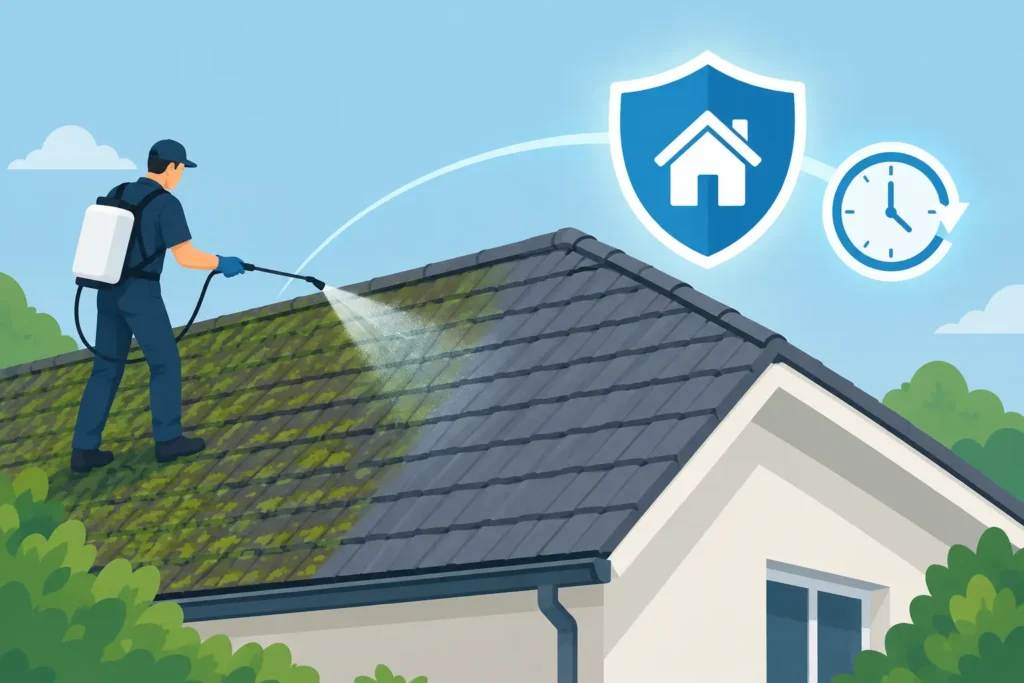
A roof can look dramatically better as soon as heavy moss has been removed, but the real value of a treatment is what happens afterwards. So, how long does roof biocide treatment last? In most cases, a professionally applied biocide treatment helps keep moss, algae and lichen under control for around two to five years. The exact lifespan depends on the roof, its surroundings and how the treatment is applied.
Biocide is not a coat of paint or a permanent seal. It works by treating the tiny spores and organic growth left on the roof surface after cleaning. This slows regrowth and allows the weather to gradually lift away remaining discolouration without the need for harsh pressure washing.
How long does roof biocide treatment last in practice?
For a reasonably open, well-maintained roof, three to five years is a realistic expectation. A roof beneath overhanging trees, or one that receives little direct sunlight, may need attention nearer the two-year mark. North-facing slopes often stay damp for longer too, which gives moss and algae the conditions they need to return.
It is also worth separating the treatment’s active protection from the roof’s appearance. Biocide begins working after application, but weathering can take several months to fully clear light stains, algae traces and lichen marks. A roof may continue to improve over time, particularly after regular rainfall.
The aim is not to promise that organic growth will never return. London roofs face rain, shade, airborne spores and leaf debris every year. A good treatment significantly slows the cycle, reducing the need for repeated heavy cleaning and helping the roof stay tidier for longer.
What affects how long a roof biocide treatment lasts?
The condition of the roof before treatment makes a substantial difference. If moss has been carefully removed first, the biocide can reach the tile or slate surface and deal with the remaining spores more effectively. Applying treatment over thick moss is less useful because the product cannot properly contact the growth underneath.
Roof material matters as well. Concrete tiles are often more porous than slate or clay tiles, so they can hold moisture and provide a more welcoming surface for organic growth. Older, weathered tiles may therefore need a closer eye than a newer roof with a smoother finish.
The surrounding environment is usually the deciding factor. Nearby trees shed leaves, seed and shade over the roof. Gutters filled with debris can overflow or keep roof edges wet. Buildings close together can restrict sunlight and airflow. These are normal property conditions, but they explain why two houses on the same street can have very different rates of moss regrowth.
Application conditions also count. A professional treatment should be selected for the roof material, mixed and applied at the correct rate, then given time to settle without immediate heavy rain washing it away. This is why a surface-specific soft-wash approach is preferable to treating every roof as though it can simply be blasted clean.
Why soft washing and biocide work well together
Pressure washing can produce an instant visual change, but it is not automatically the right method for every roof. High pressure can disturb fragile tiles, force water where it does not belong and remove surface material from ageing roofs. It can also leave spores behind, allowing moss to establish itself again sooner than expected.
Soft washing takes a more considered route. First, substantial moss is removed by hand or with suitable low-impact tools. The roof is then treated with an appropriate biocide solution that reaches the roots and spores left on the surface. The treatment continues working after the visit, with rain and time gradually improving the finish.
This approach is especially useful for homeowners and landlords who want a cleaner roof without unnecessary stress on the material. It is not always the fastest-looking option on day one, but it is often the more sensible choice for the long-term condition of the roof.
Signs your roof may be ready for another treatment
You do not need to wait for the roof to become heavily carpeted in moss again. Early signs are usually easier and more economical to manage. Look for small green patches at tile edges, dark algae streaks, fresh moss gathering around the ridge or in valleys, and debris collecting along the lower roof line.
Gutters are a useful clue too. Moss falling into the gutter can contribute to blockages, especially after windy or wet weather. If water is spilling over the guttering or plants are growing from it, both the roof and gutter system deserve attention.
A visual check from ground level once or twice a year is normally enough. Avoid walking on the roof yourself, as this can damage tiles and presents an obvious safety risk. Clear photographs taken from a safe position can help a professional assess the level of growth and advise whether another treatment is needed.
Can you make a biocide treatment last longer?
Yes, although the goal should be sensible maintenance rather than trying to make a roof maintenance-free. Keeping gutters clear is one of the simplest ways to reduce excess dampness around the roof edge. Removing overhanging branches, where appropriate and safe to do so, can improve light and airflow without changing the character of the garden.
It also helps to deal with small areas of regrowth before they spread. A light follow-up treatment is very different from allowing years of moss to build up until heavy removal is required. For managed properties and rental homes, scheduling periodic exterior checks can prevent minor roof and gutter issues from becoming a larger maintenance job.
Be cautious with do-it-yourself chemical treatments. Products vary in strength and suitability, and incorrect application can affect plants, drainage areas or nearby surfaces. There is also the practical issue of safe access. A treatment that is not applied evenly or is rinsed away too soon may not deliver the expected lifespan.
What to expect from a professional roof treatment
A proper assessment should consider the roof’s material, age, pitch, access, moss coverage and nearby planting before work begins. The cleaning method should suit the roof rather than follow a one-method approach. Careful preparation, controlled application and tidy completion all matter just as much as the product itself.
At Crown Clean London, roof work is approached with soft-wash methods and long-lasting biocide protection where they are appropriate for the surface. Customers can send photos and a postcode for a clear assessment before booking, which is often the quickest way to establish the likely condition of the roof and the right next step.
If your roof is beginning to show fresh green growth, do not assume it needs aggressive cleaning straight away. A timely inspection and the right treatment can help keep it cleaner, sharper and easier to maintain for years rather than months.